Watch the incident. Understand the decision.
A raised finger, a long pause and a replay can change the way a cricket passage is understood. They are not interchangeable pieces of information. Decision Line follows the sequence from what happened on the field to what was asked, what evidence was available and what the officials communicated. It is a reading guide for spectators, rather than an alternative umpiring service.
Explore the separate cricket platform ↓An incident has more than one question
The situations on this page are illustrative. They are not reports of disputed real matches and do not invite a ruling on an unidentified clip. Cricket's Laws provide the foundation, while the relevant competition's playing conditions determine which review procedures and technologies apply. Start by identifying that context before assuming that every televised match follows an identical process.
Begin with a plain description of the event. A ball passes the bat, a fielder attempts a catch or a batter reaches for the crease. Those observations identify the action without deciding its legal consequence. The question to be answered may concern contact, position, timing or a combination of factors. A useful description leaves those elements visible instead of jumping directly to out or not out.
Imagine a fictional close play at a wicket. One camera shows the batter approaching the line; another shows the wicket being broken. Before comparing the pictures, ask whether they show the same instant and whether the relevant details are visible. Two attractive stills are not automatically a synchronised sequence. The missing relationship between them may be the most important information.
Write the question as specifically as possible. Was the batter's bat grounded beyond the line at the relevant moment? Did a replay show a different part of the incident? A specific question helps you understand why an official may request an angle that initially seems less dramatic than the broadcast's preferred close-up.
- ObservationDescribe the action before deciding what it proves.
- QuestionIdentify the precise issue and the applicable context.
- CommunicationRecord what the officials announced.
An appeal is not a verdict
An appeal asks for a decision; it does not prove the answer. Players may be confident, surprised or mistaken about a moment that happened quickly. The intensity of their reaction is a visible part of the scene, but it is not a substitute for the conditions that govern the decision. Keep the request separate from the ruling that follows it.
The same distinction applies to a crowd or a commentary box. Several voices agreeing at once can create a strong impression without adding a new camera angle or resolving a hidden detail. A spectator can acknowledge that reaction while waiting for the officials' communication. Describing the sequence accurately is more useful than trying to be first with a verdict.
In a short note, record the action, the appeal and the decision on separate lines. If a review follows, add it as another step. This simple structure prevents a later correction from rewriting what was initially seen or announced. It also makes clear which part of the account is an observation and which part comes from an official ruling.
Read signals in their immediate context
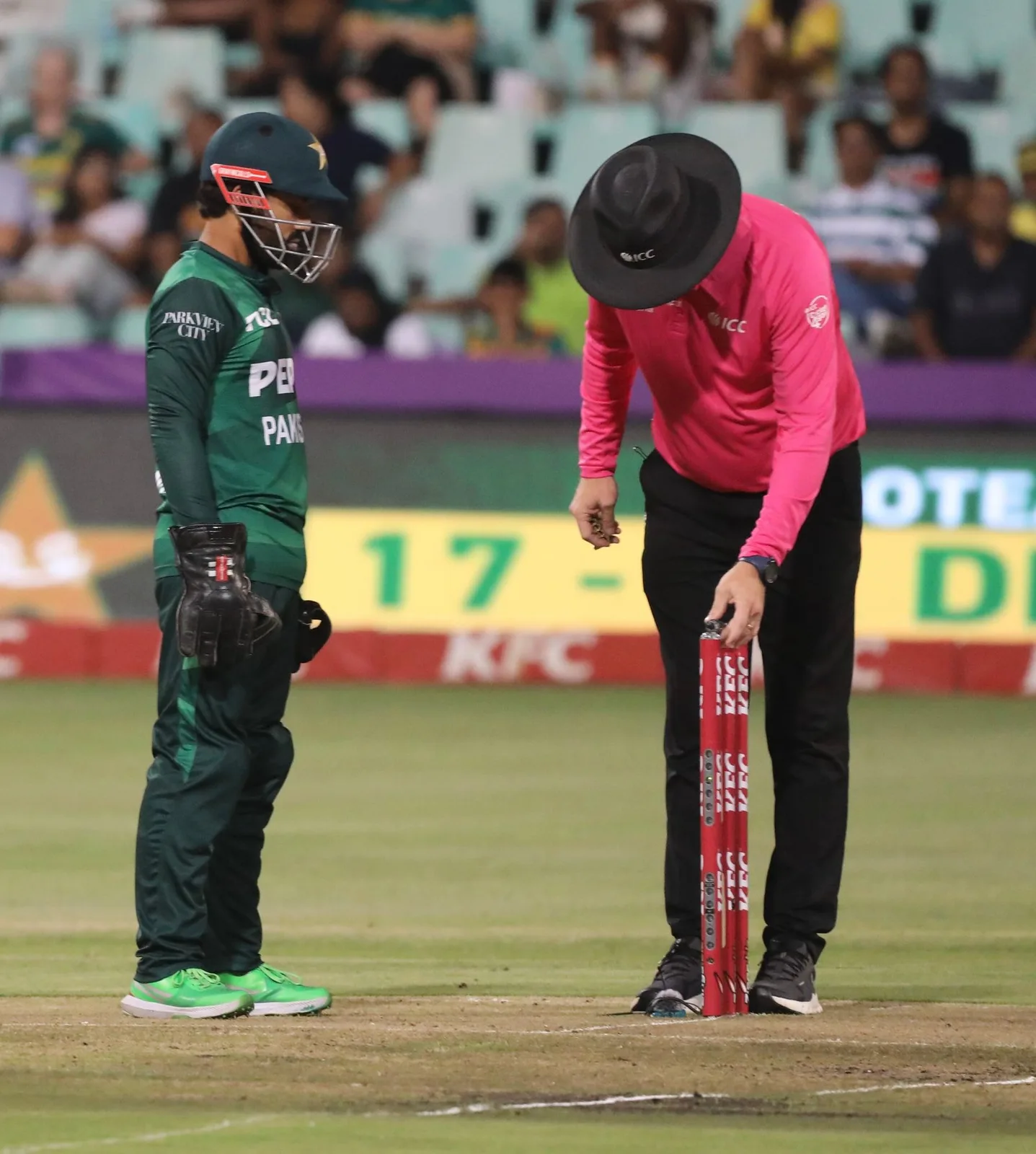
Umpire signals communicate specific information. Raising an index finger above the head signals out; extending both arms horizontally signals a wide; extending one arm horizontally signals a no ball. These basic distinctions are useful to recognise, but a photograph of a gesture alone may omit the call, timing or preceding event that completes its meaning.
For example, a camera may cut to an umpire after the delivery has ended, showing a repeated signal to the scorers rather than the first moment of the call. A replay may also appear while the broadcast continues discussing a later decision. Keep the image and its place in the sequence together. Do not attach the nearest on-screen graphic to every gesture by assumption.
If the action is unclear, wait for the complete communication and the updated score rather than reconstructing a whole incident from an arm position. Learning a few signals improves orientation. It does not remove the need to read the relevant law or the official explanation when a more complicated situation is involved.
Review is a process, not just a slow replay
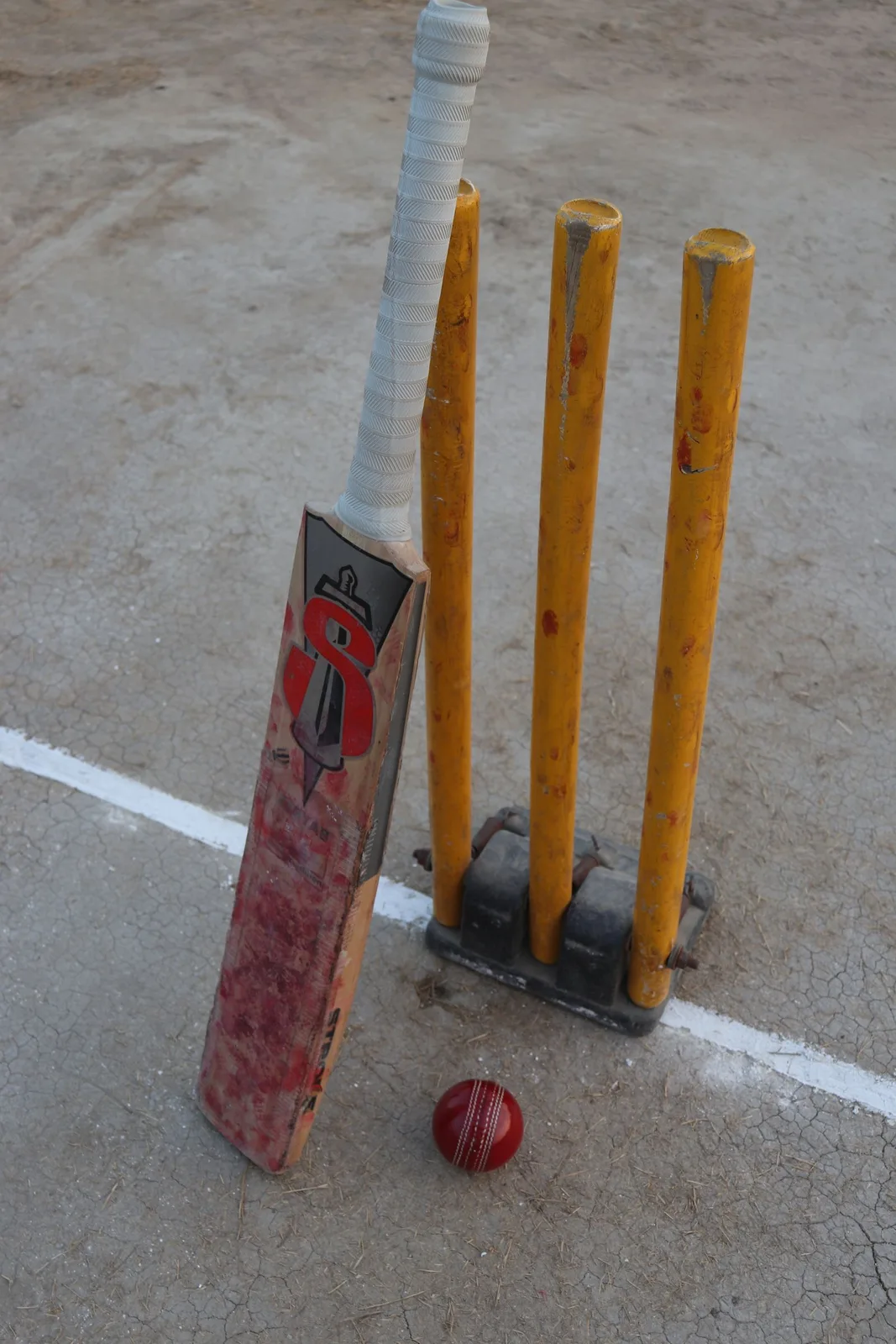
The Decision Review System assists match officials with decision-making. An umpire review and a player review are different routes into that process. The detailed protocols belong to the applicable playing conditions. A television replay shown to viewers is therefore not, by itself, evidence that a formal review has been requested or that every available question can be reconsidered.
Watch for the sequence the broadcast actually identifies. Who initiated the review? What decision is being considered? What information is being requested? If those details are not yet clear, leave them open. Filling the gap with the procedure from another competition can make an explanation sound authoritative while describing the wrong process.
Technology does not make the surrounding definitions optional. A graphic can answer a particular question within a protocol, while other parts of the decision depend on different evidence. It is better to understand the role of each item than to treat every replay or coloured display as a universal final answer.
An angle reveals some things and hides others
A front-on view and a side-on view do not supply identical information. One may clarify the relationship between a batter and the stumps while the other better shows a moment near a line. Perspective, obstruction and the spacing between recorded frames can limit what a viewer can confidently describe. Magnification makes a detail larger; it does not create information that the original recording did not capture.
Use a fictional close catch as an exercise. A distant angle might show the fielder's movement and the ball's route but not the final contact near the ground. A tighter angle might reveal the hands while cropping the preceding bounce. Neither view should be asked to answer every question. The useful next step is to connect the sequence, not to announce that the most dramatic still must be decisive.
Avoid comparing unmatched frames as though they were a before-and-after experiment. First establish the event and its timing, then describe what each view contributes. If a relevant detail remains hidden, saying so is a complete and useful observation. Uncertainty is not repaired by adding a more confident caption.
Slow motion changes the viewing experience
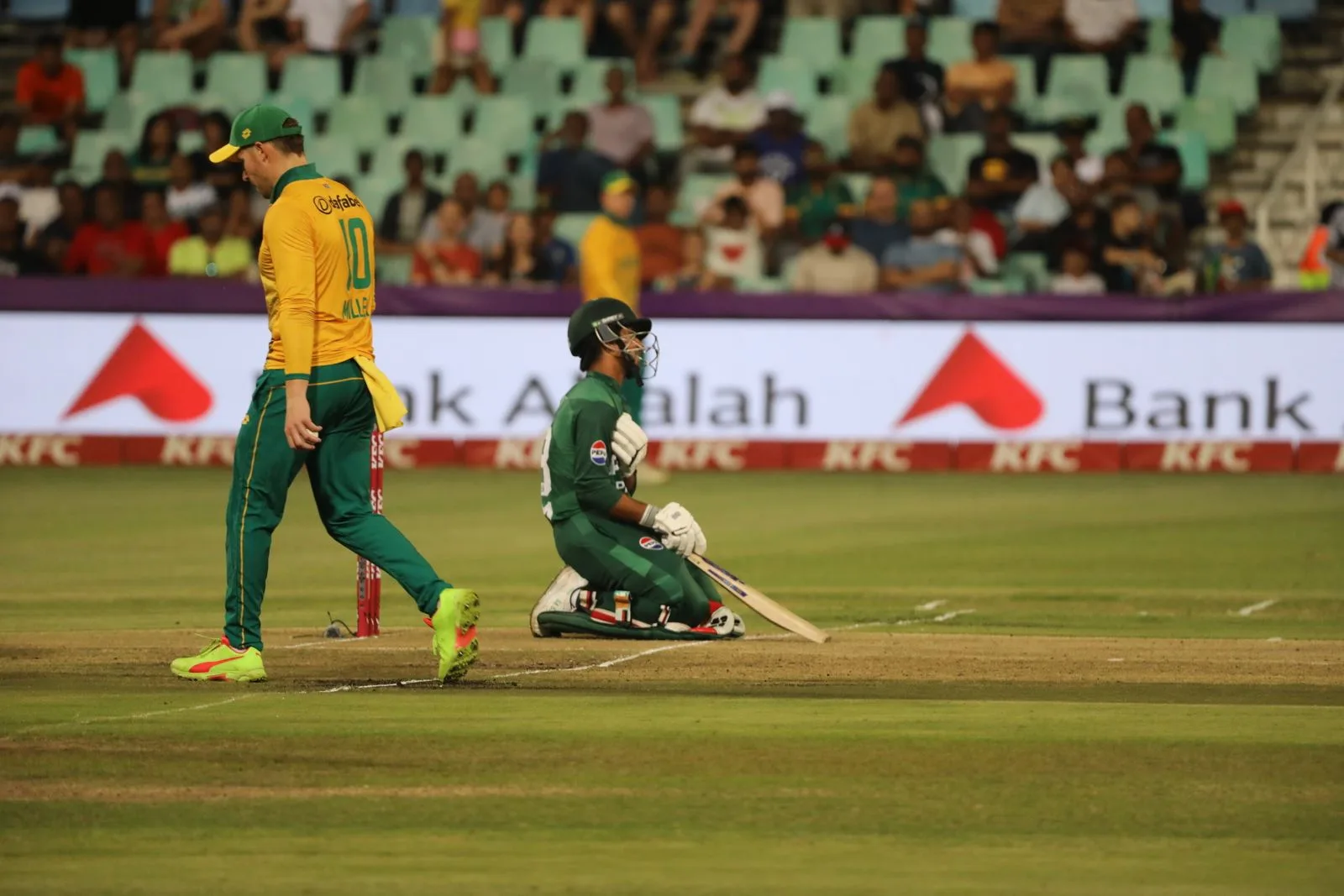
Slowing a recording can help a spectator notice an event that was difficult to follow at normal speed. It also changes the rhythm of the action. A brief contact can appear prolonged, and a quick movement can seem deliberate. Those impressions should not be confused with new facts about intention or control.
For a useful comparison, watch the whole passage at its ordinary pace before examining the detail. Then return to the wider sequence. This preserves the relationship between the close-up and the action it belongs to. A looped fragment may be worth studying, but it should not quietly become the only version of the event in your account.
Keep descriptive language proportionate. A replay may show where a foot was or when a ball changed direction. It does not necessarily show what a player was thinking. Separating the visible movement from an explanation of motive makes a reading note more precise and avoids inventing a story about a person from a short clip.
Keep an incident ledger instead of a verdict collection
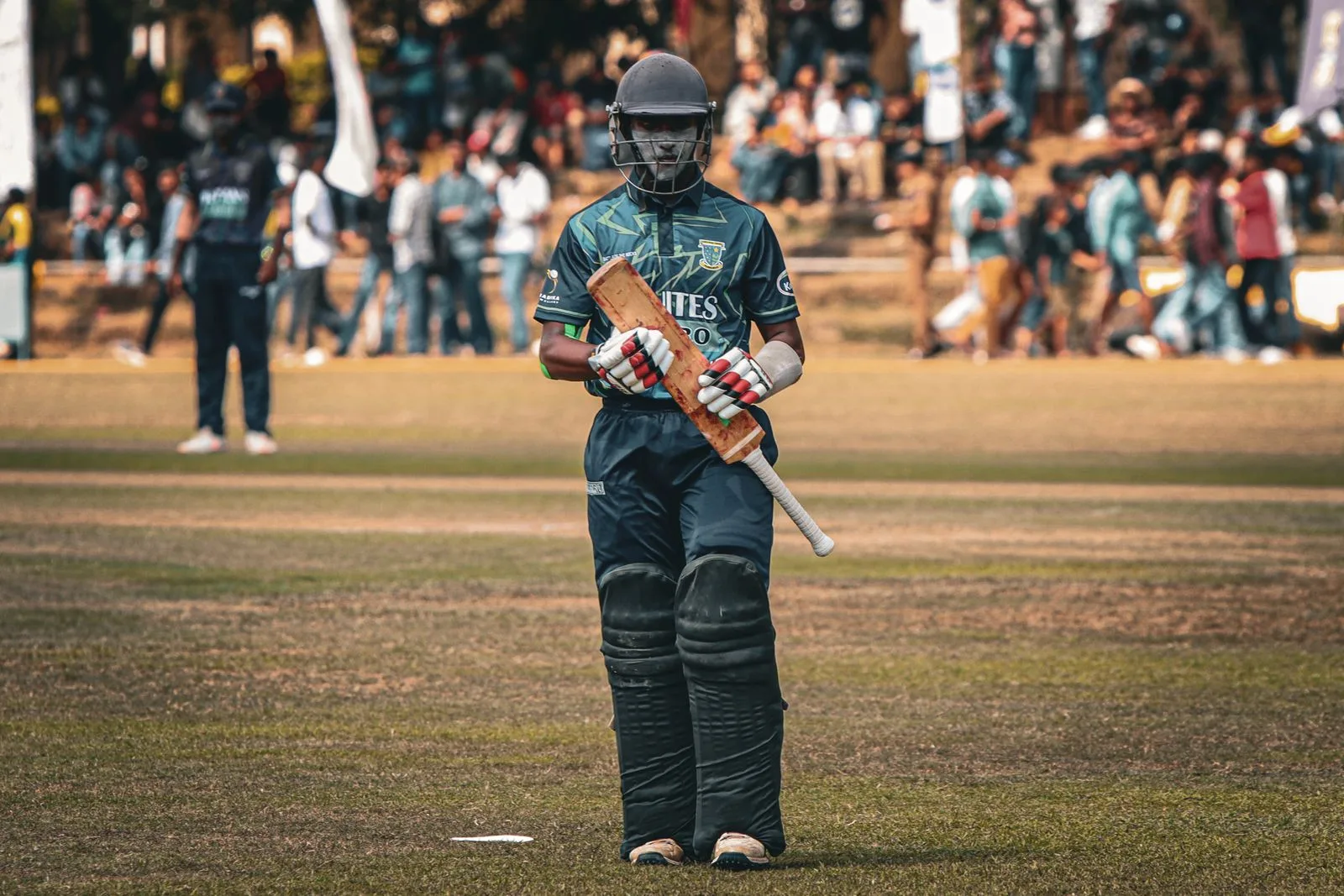
A compact incident ledger can use three headings: question, evidence and communicated decision. Under question, describe the precise issue. Under evidence, identify the views or information actually supplied. Under decision, record what the officials announced. Add a fourth note for anything the available broadcast did not resolve for you as a spectator.
This format helps when an explanation changes. Perhaps another angle clarifies the contact, or a commentator corrects the description of the review. Amend the relevant line instead of treating the entire incident as though it had always been obvious. An honest sequence remains useful even when its first interpretation was incomplete.
The ledger is not an unofficial challenge to every decision. Its purpose is to improve how you read and describe cricket. A viewer can learn from an incident without claiming access to the officials' complete information or declaring a definitive ruling from an edited clip. Knowing the limits of your view is part of understanding the event.
A useful test is to remove the final result from your first description. If the sentence still tells another reader where the ball, bat, wicket or fielder was, it contains an observation. If it becomes meaningless without saying who was right, it may contain only a verdict. Both types of statement can appear in an account, but they should not be mistaken for one another.
Be equally careful with captions shared outside the original broadcast. A cropped still can lose its place in time: whether it came before contact, after the wicket was broken or from a replay of an earlier delivery. Retain the sequence label when making a note. A confident caption cannot supply a timestamp that the image does not contain.
| Question | Available evidence | What remains open |
|---|---|---|
| Where was the bat? | The visible position in a matched frame | A detail hidden by the camera |
| What was requested? | The identified appeal or review | A procedure not yet confirmed |
| What was decided? | The official communication | Any conclusion about the next delivery |
Put the decision back into the match
Eligible adults who want to inspect a separate commercial cricket and casino platform can follow the sponsored reference to Cricketin. The destination controls its own current availability and terms. Decision Line provides the reading explanations here independently; no account or transaction is needed to use them.
Visit CricketinAfter the officials communicate a decision, return to the recorded match state. Identify what changed: a wicket, a run entry, the status of the delivery or another confirmed part of the situation. A dramatic pause can feel like the whole story, but its place in the innings becomes clearer when the updated record is read alongside it.
Then separate that confirmed change from any forecast. A dismissal identifies the end of one batter's innings under the decision; it does not specify how the replacement will play. A signal can clarify the scoring entry without explaining every later tactical choice. Restoring this distinction keeps an incident account connected to the game while leaving the next passage open to observation.
Revisit the whole passage before finishing the note
End an incident note by returning to the wider match situation. What did the scoreboard record? What was officially communicated? Which part of the original observation changed, and which part stayed the same? This final pass prevents a close-up from becoming detached from the event it was meant to explain.
For practice, choose a fictional sequence with an appeal, a pause and a decision. Write one sentence for each step without adding a conclusion about a player's character or the next result. Then identify one detail that another angle could help clarify. The exercise is complete when the question is clear; it does not require inventing an answer that the evidence cannot support.
Good replay literacy is a habit of proportion. Watch closely, distinguish the process from the pictures and use the relevant official information for a rule-dependent question. Cricket becomes easier to follow when an observation, a request and a ruling each have their proper place in the account.